Roadeo — A Bilingual Booking Marketplace for Mobile Automotive Services
Short Description
Roadeo is a marketplace in Puerto Rico where customers find and book mobile automotive service providers (detailers, mechanics, tire services and more) who come to them. I worked on the customer-facing web app from the TypeScript rewrite of the earlier low-code version through to production, contributing roughly 90 commits across UI, search, booking logic, Cloud Functions and data modeling. I led the customer-experience redesign, rebuilt search to handle accents, abbreviations, English and Spanish, added travel-time–aware scheduling, shipped a post-service review system with one-time SMS links, and built a map view for discovering businesses by location.
Case Study
1. Overview
Roadeo is a marketplace in Puerto Rico where customers find and book mobile automotive service providers (detailers, mechanics, tire services and more) who come to them. Customers search, pick a business and service, choose a location and time, and send a service request. Providers accept or decline requests from a companion mobile app.
The web app is the customer-facing side of that marketplace, plus the marketing and product pages that bring providers onto the platform. I worked on it from the TypeScript rewrite of the earlier low-code version through to production, contributing roughly 90 commits across UI, search, booking logic, Cloud Functions and data modeling.
2. The Problem
The first version of the web app was built in a low-code tool. It worked as a prototype but had real limits:
| Problem | Impact |
|---|---|
| Hard to find things | Customers searched in English and Spanish, often without accents or with abbreviations, and the search missed many of those queries |
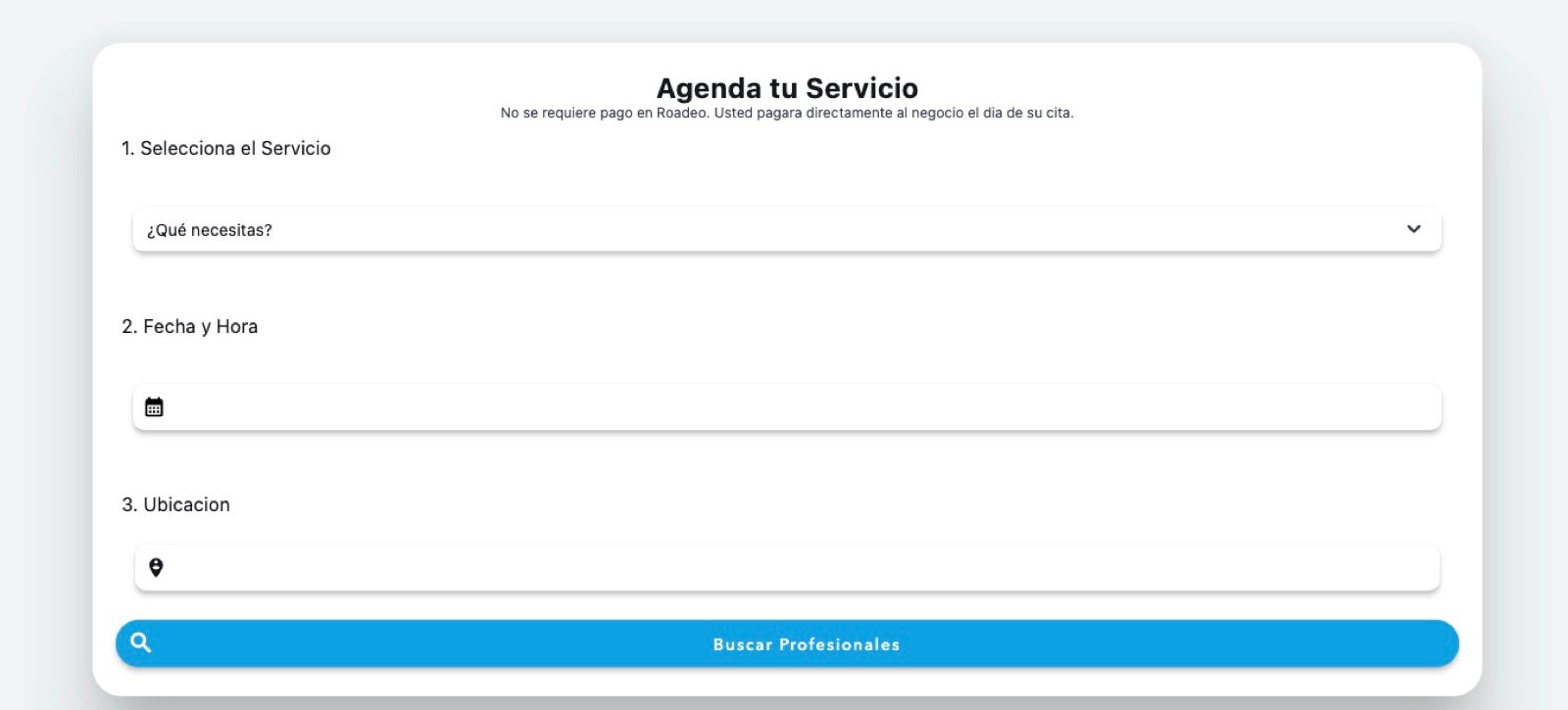
| Bookings that couldn't happen | The booking flow didn't account for how long a provider needs to drive between appointments, so customers could ask for times that weren't realistic |
| A thin feedback loop | There was no structured way to collect reviews after a service or to hear from customers who were unhappy |
| Mobile experience | Most traffic is on phones, and the layouts weren't built for small screens |
Before: the earlier version (September 2025)
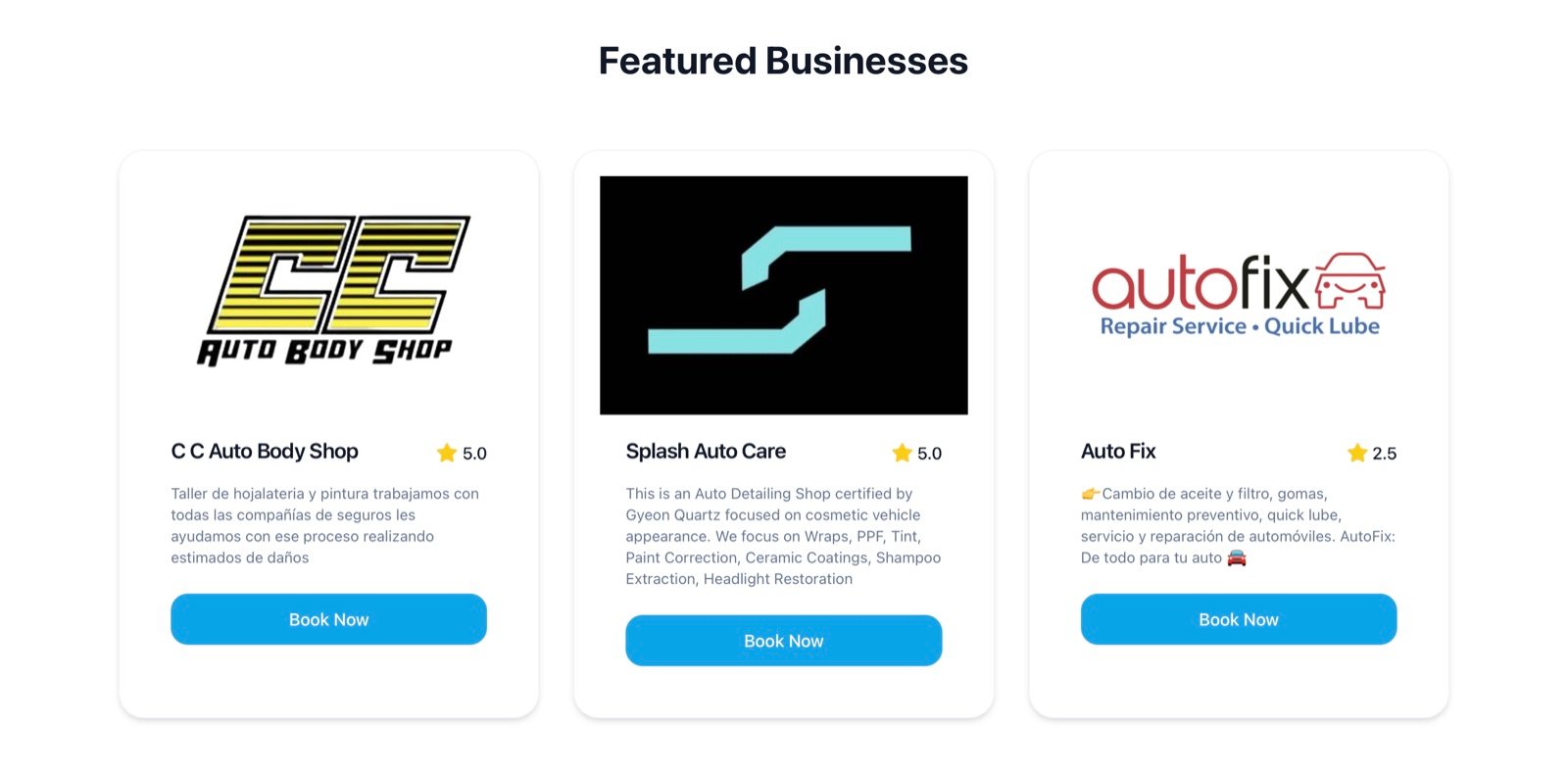
3. My Contributions
3.1 Redesigning the customer experience and booking flow
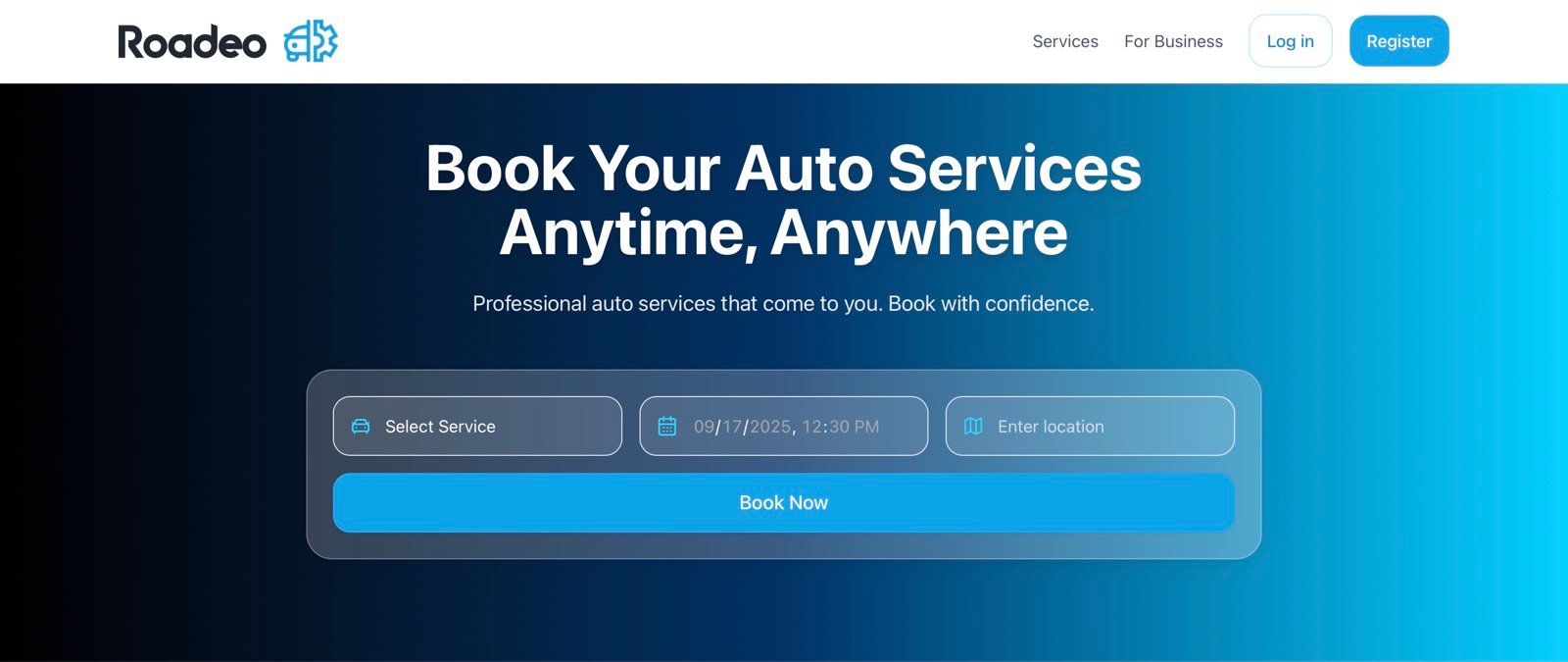
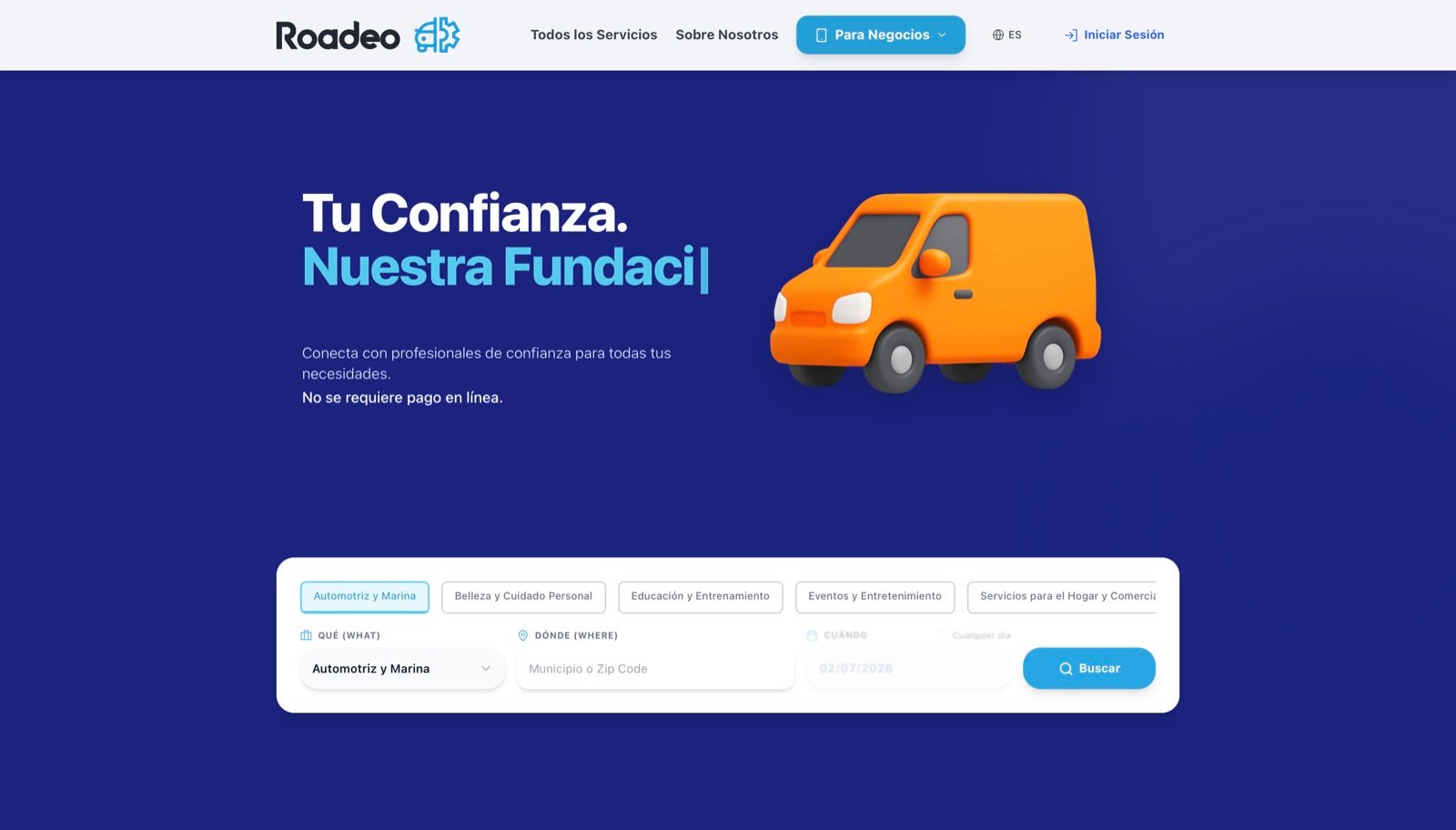
I led the redesign of the customer interface during the move to React + TypeScript. That included rebuilding the multi-step booking flow (municipality → date → category → business → service → location → time → submit) and connecting it more directly to Firestore.
Rebuilding the booking flow (October – November 2025)
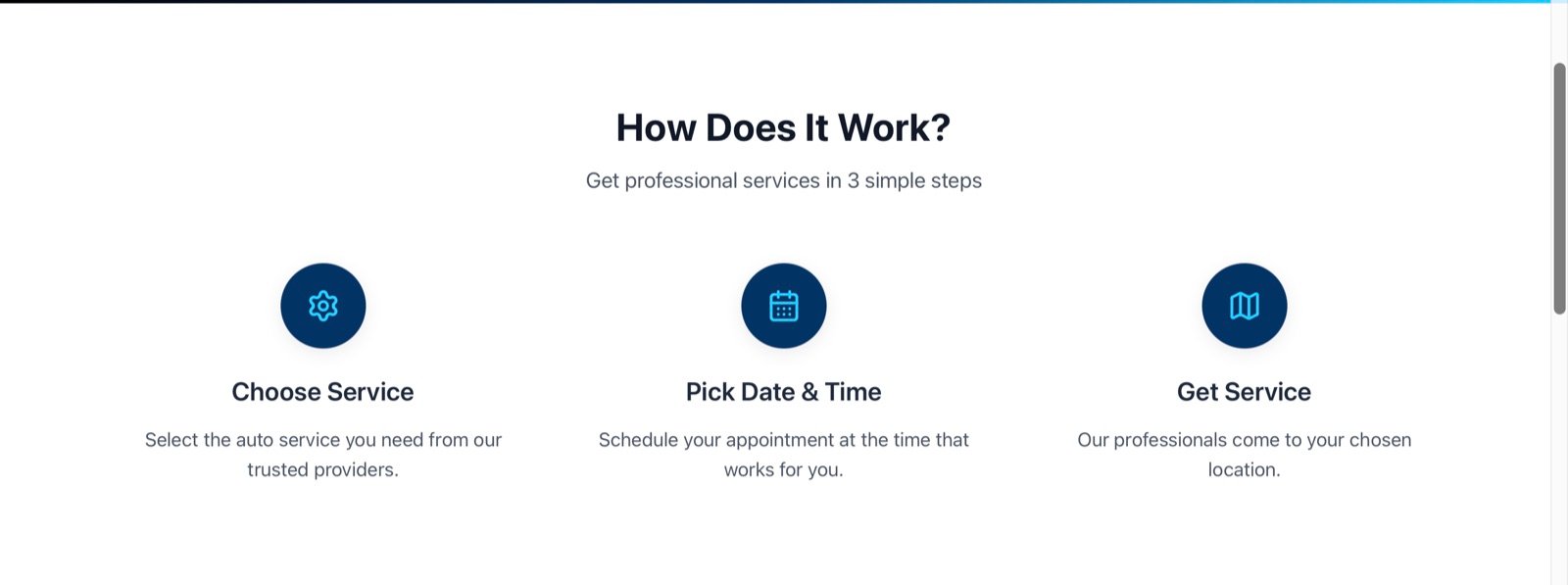
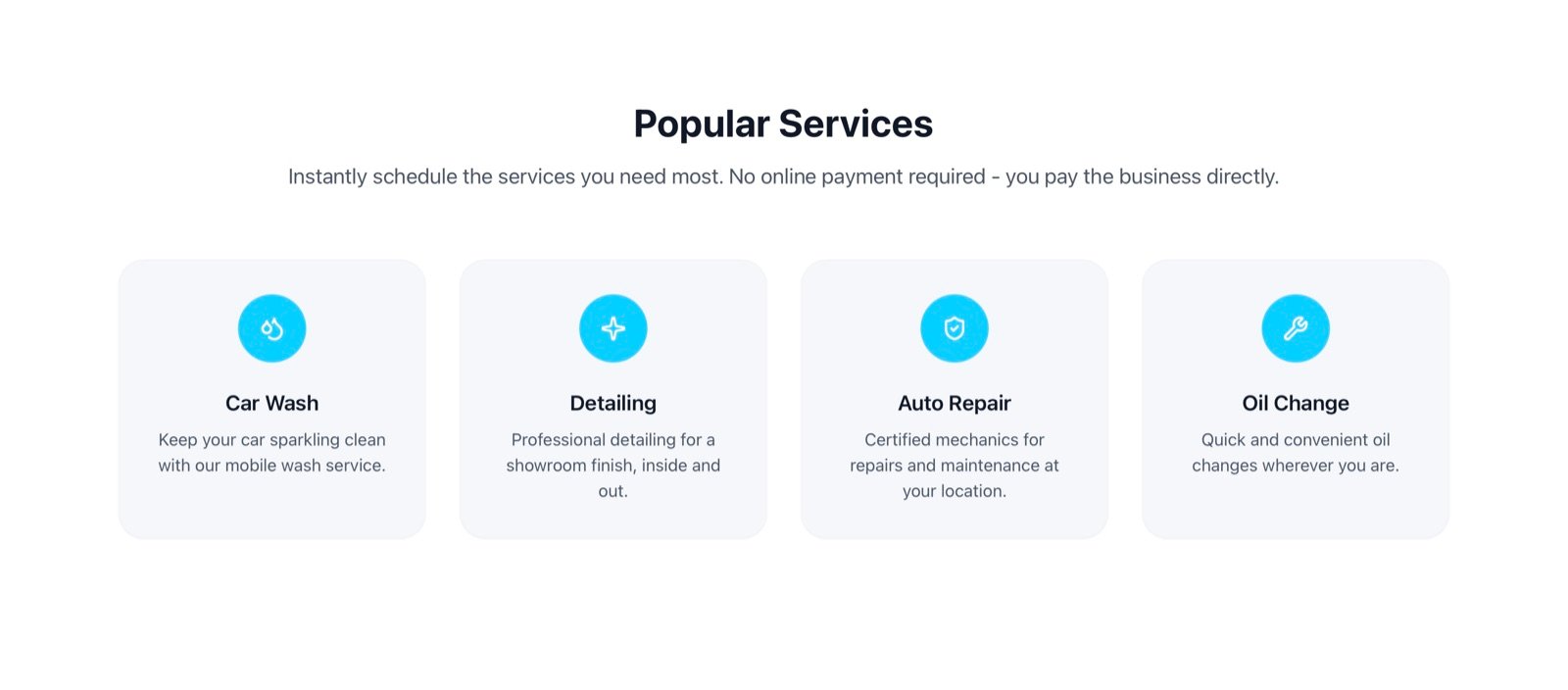
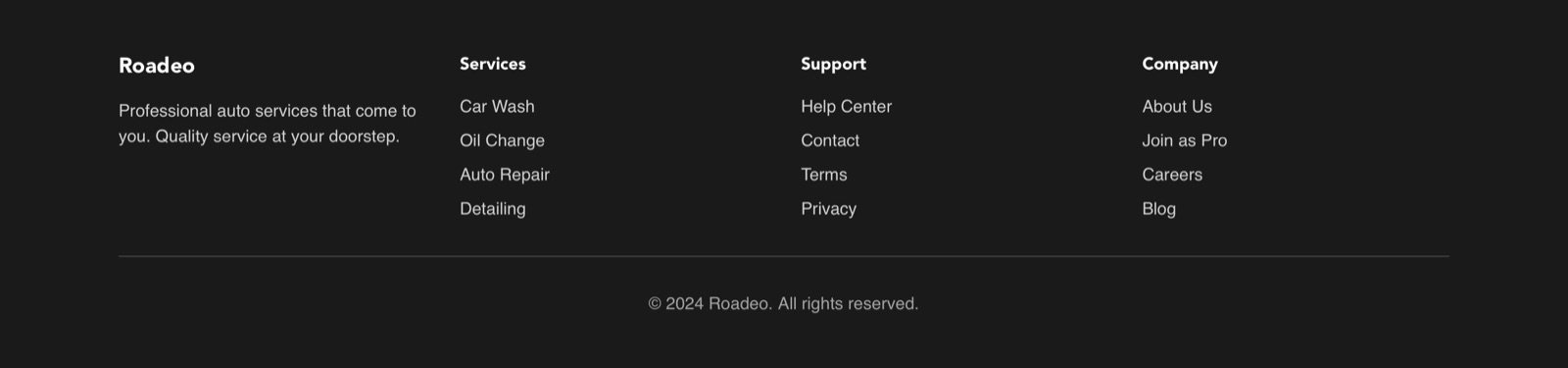
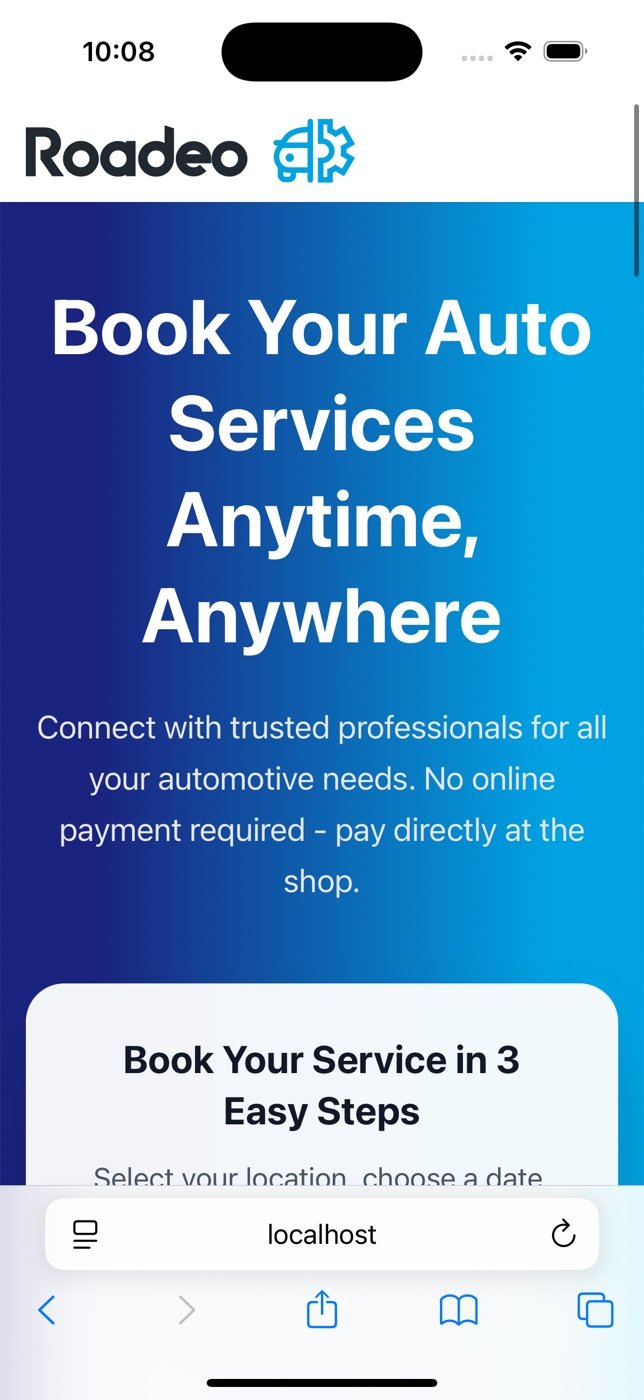
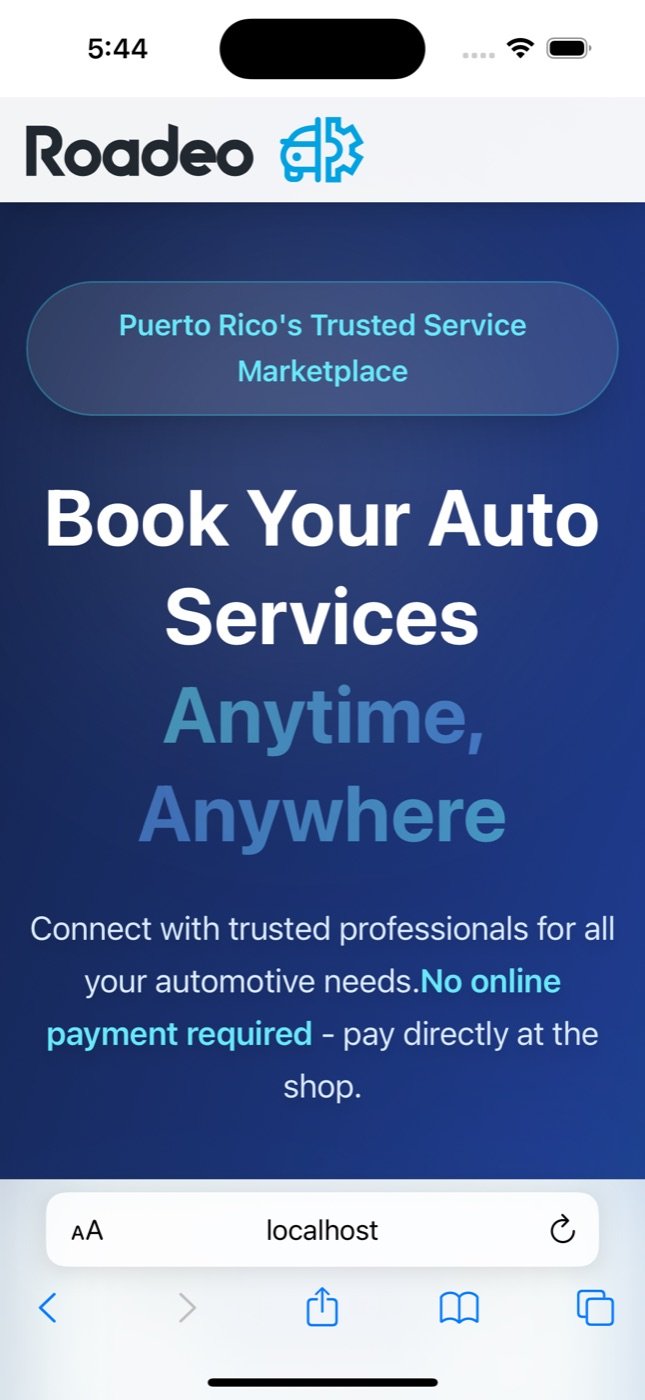
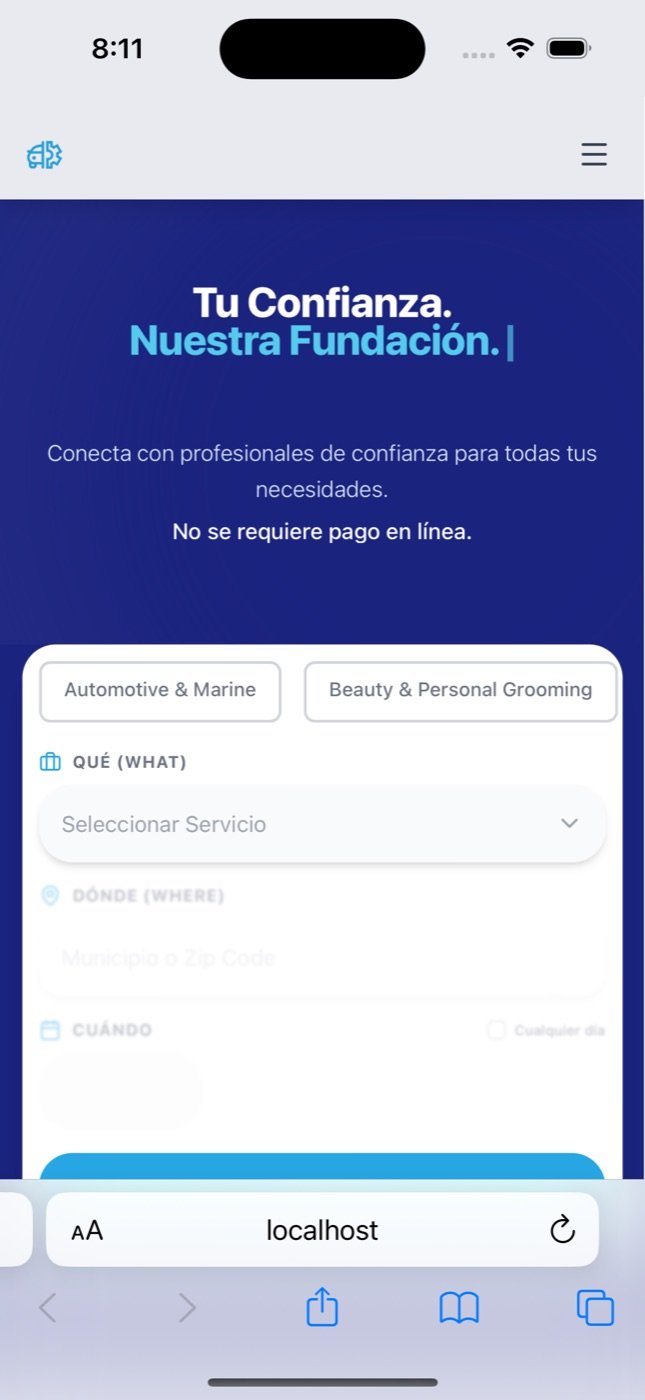
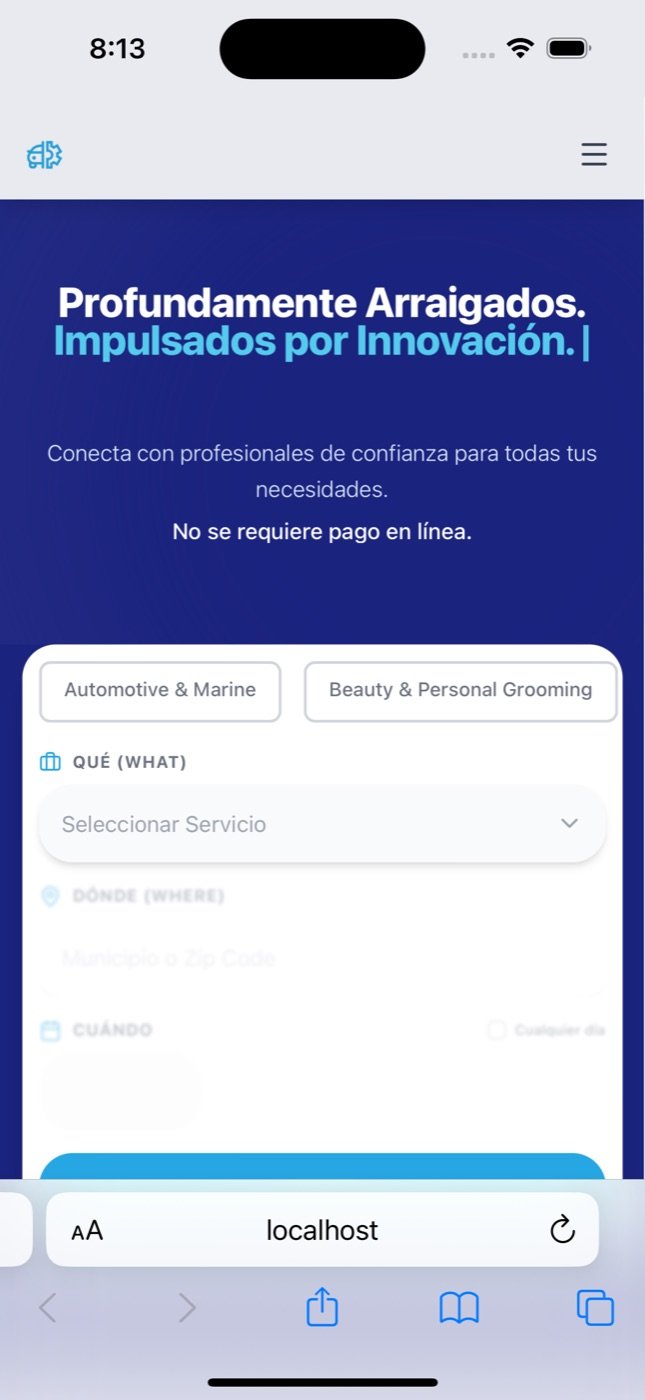
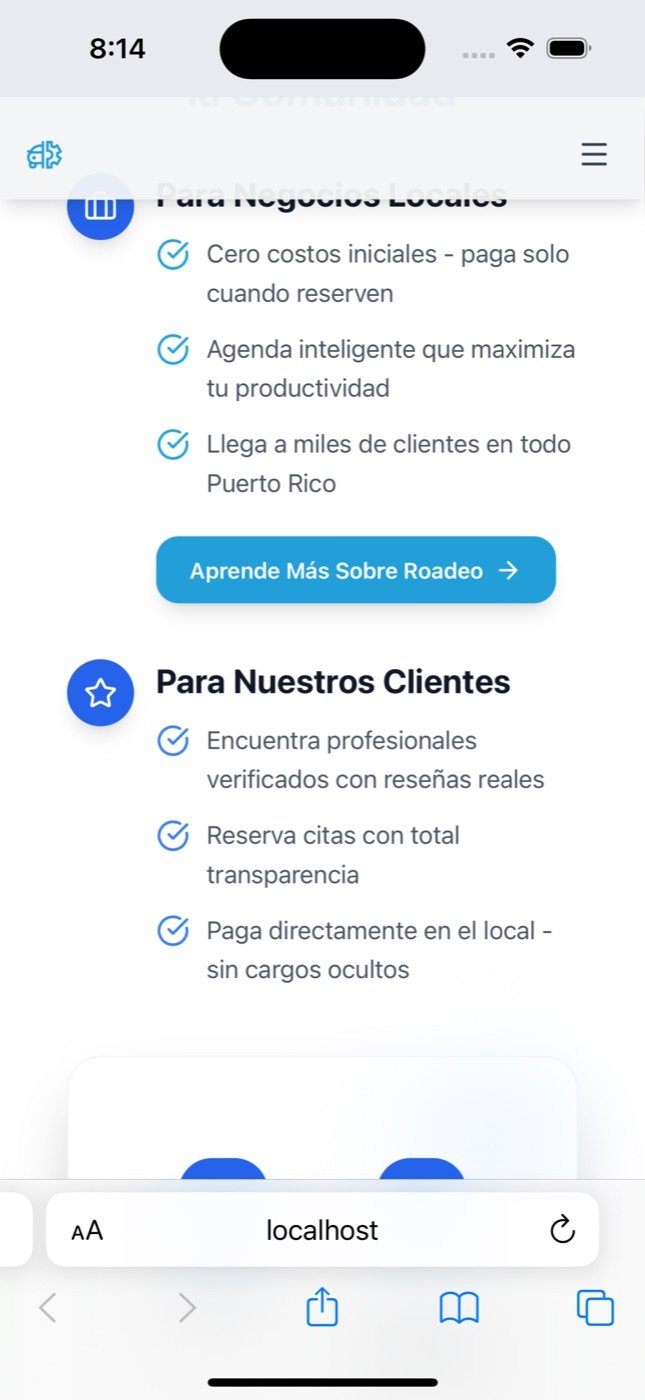
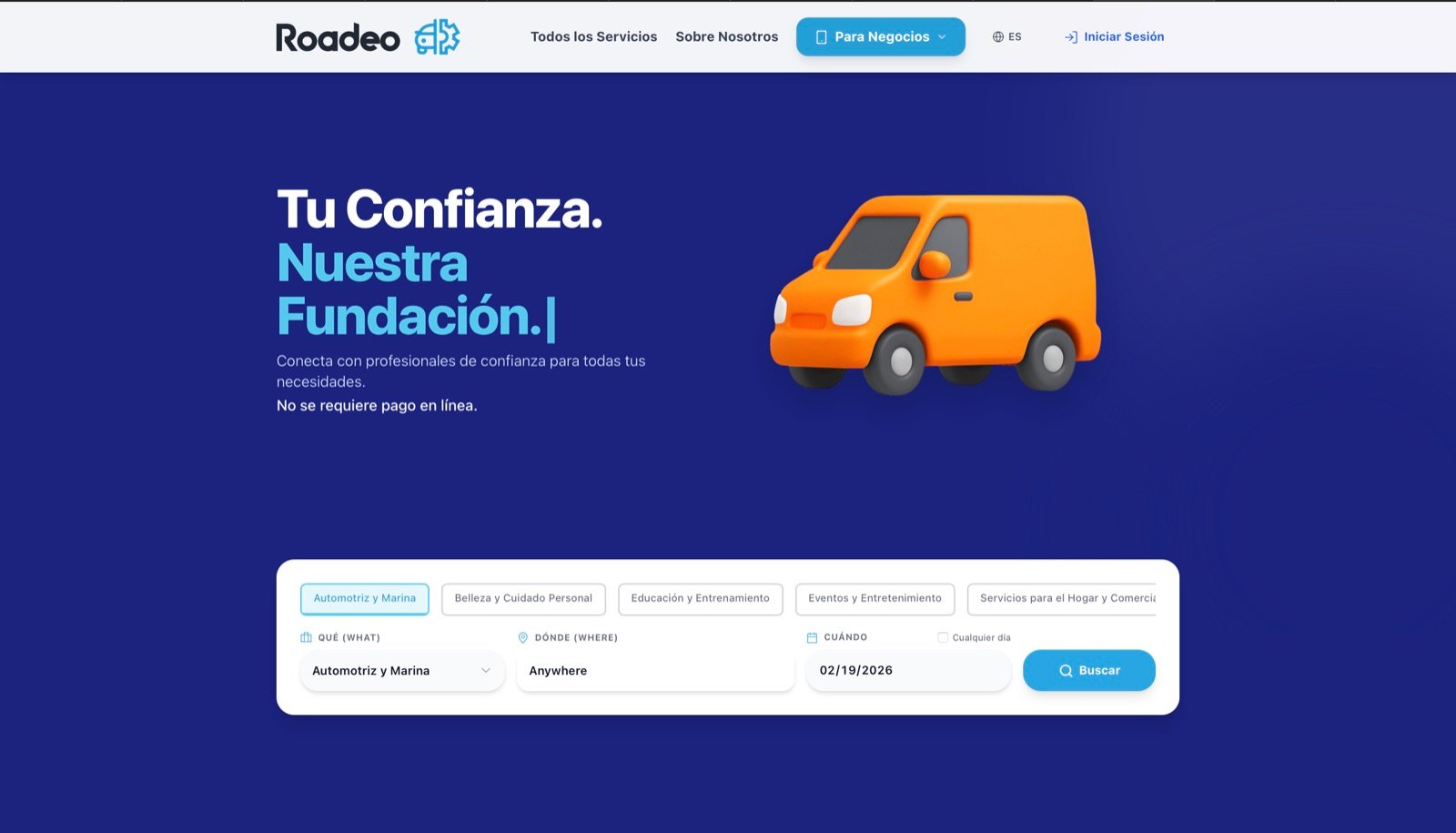
Later I did a dedicated mobile-first pass across the site: standardized spacing and typography, moved desktop scaling to font-size-based sizing, added a category "pill bar" for quick navigation, and simplified the visual language so the brand looked more established.
Redesigned site (December 2025 – February 2026)
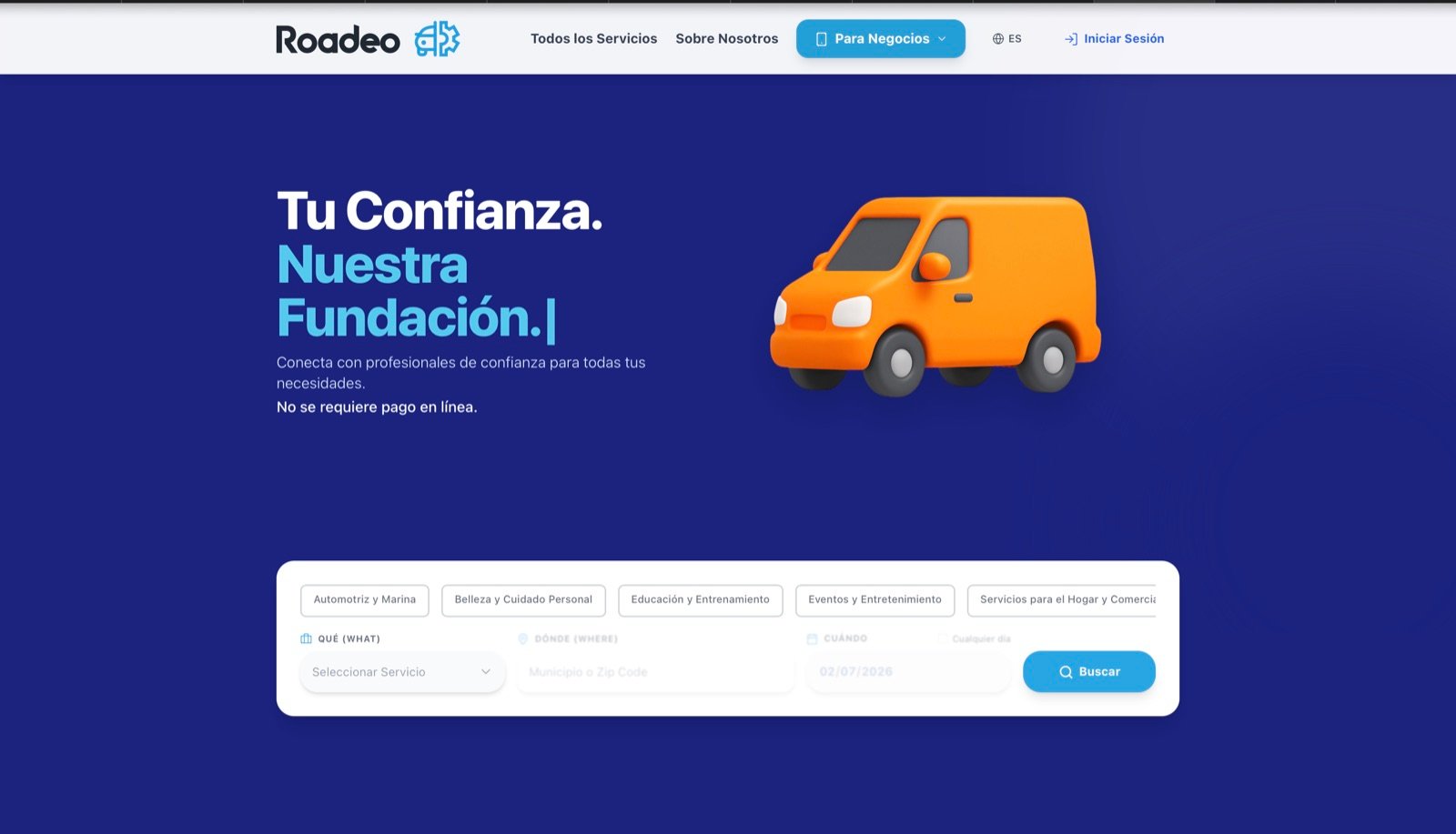
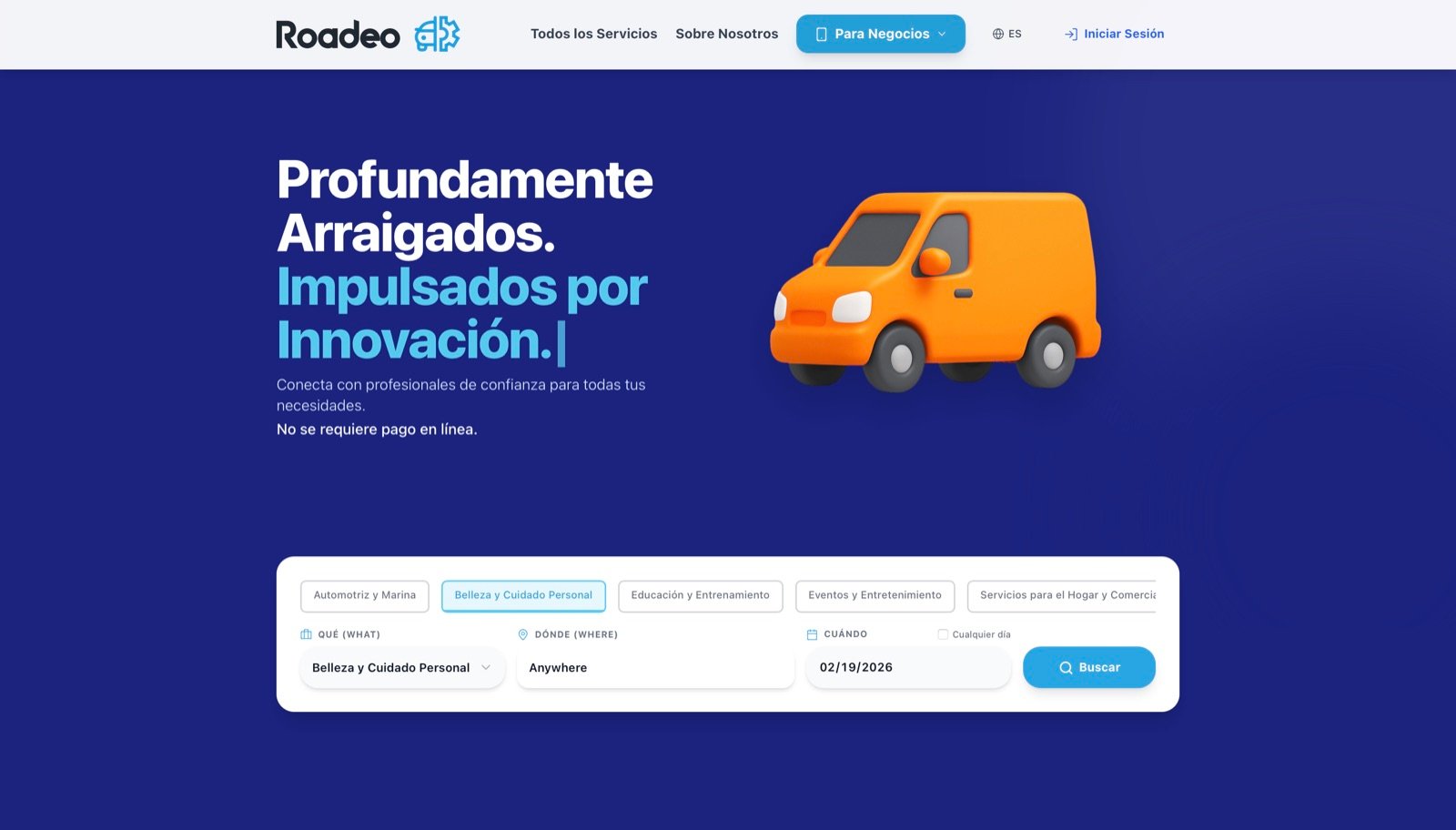
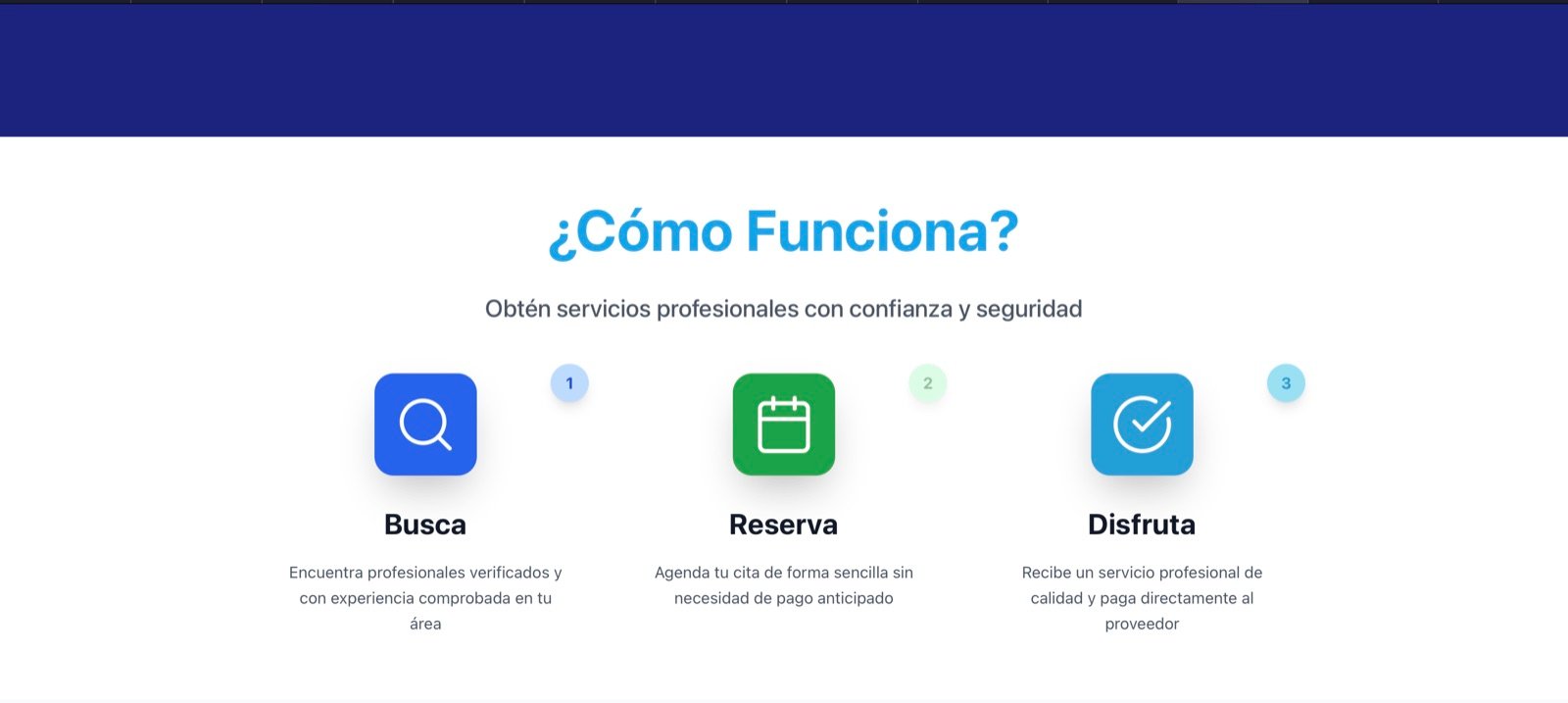
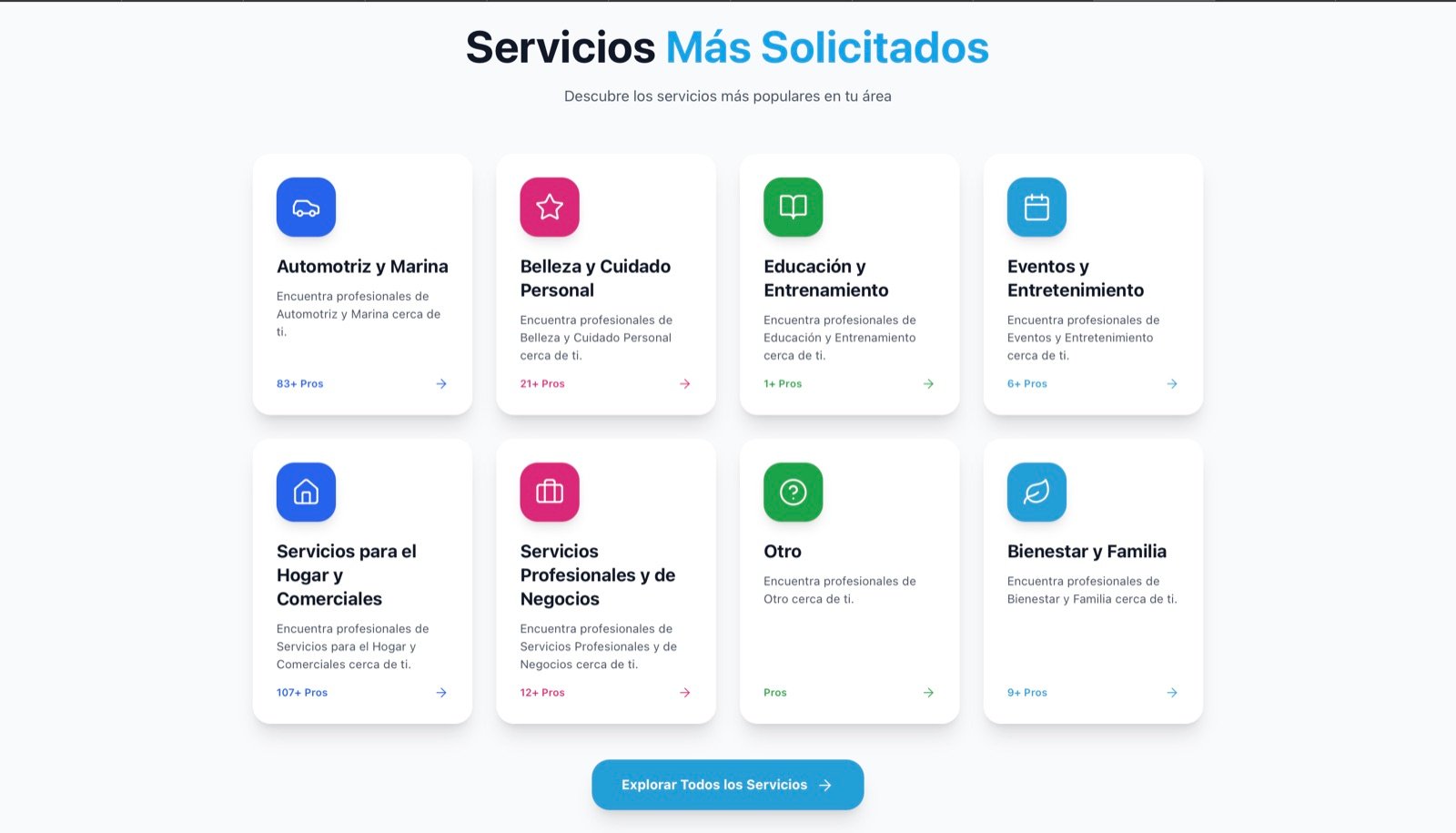
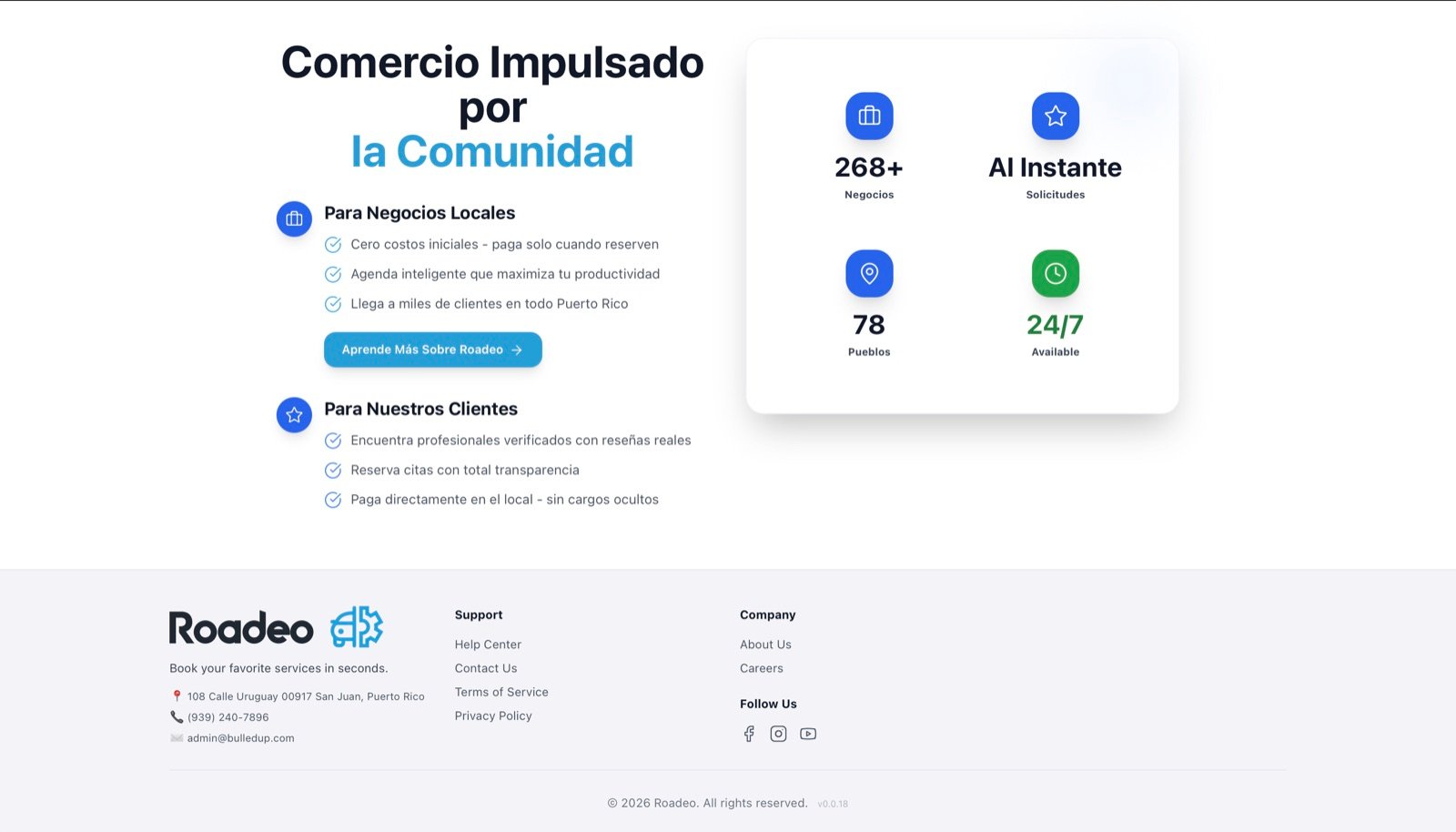
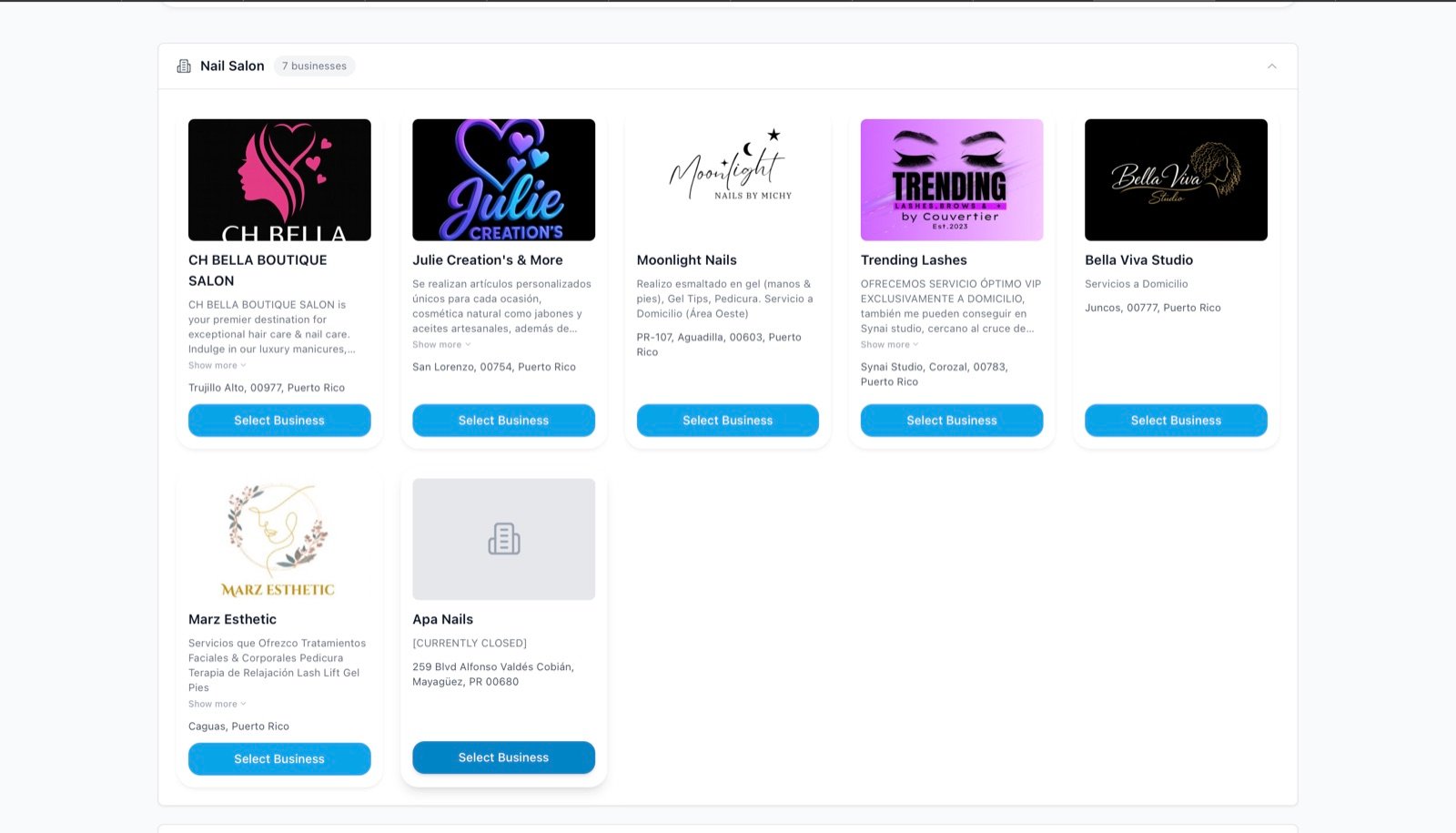
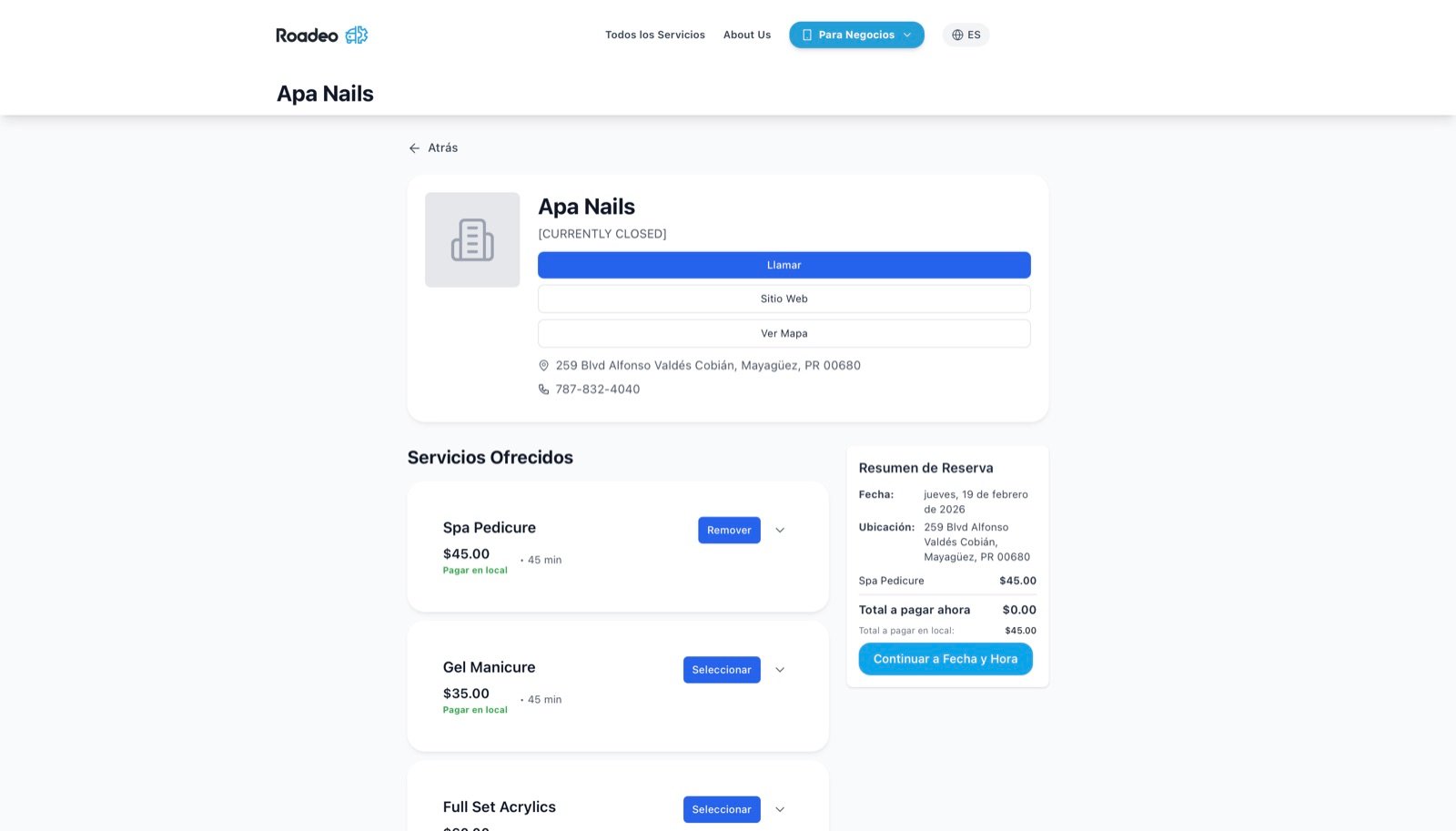
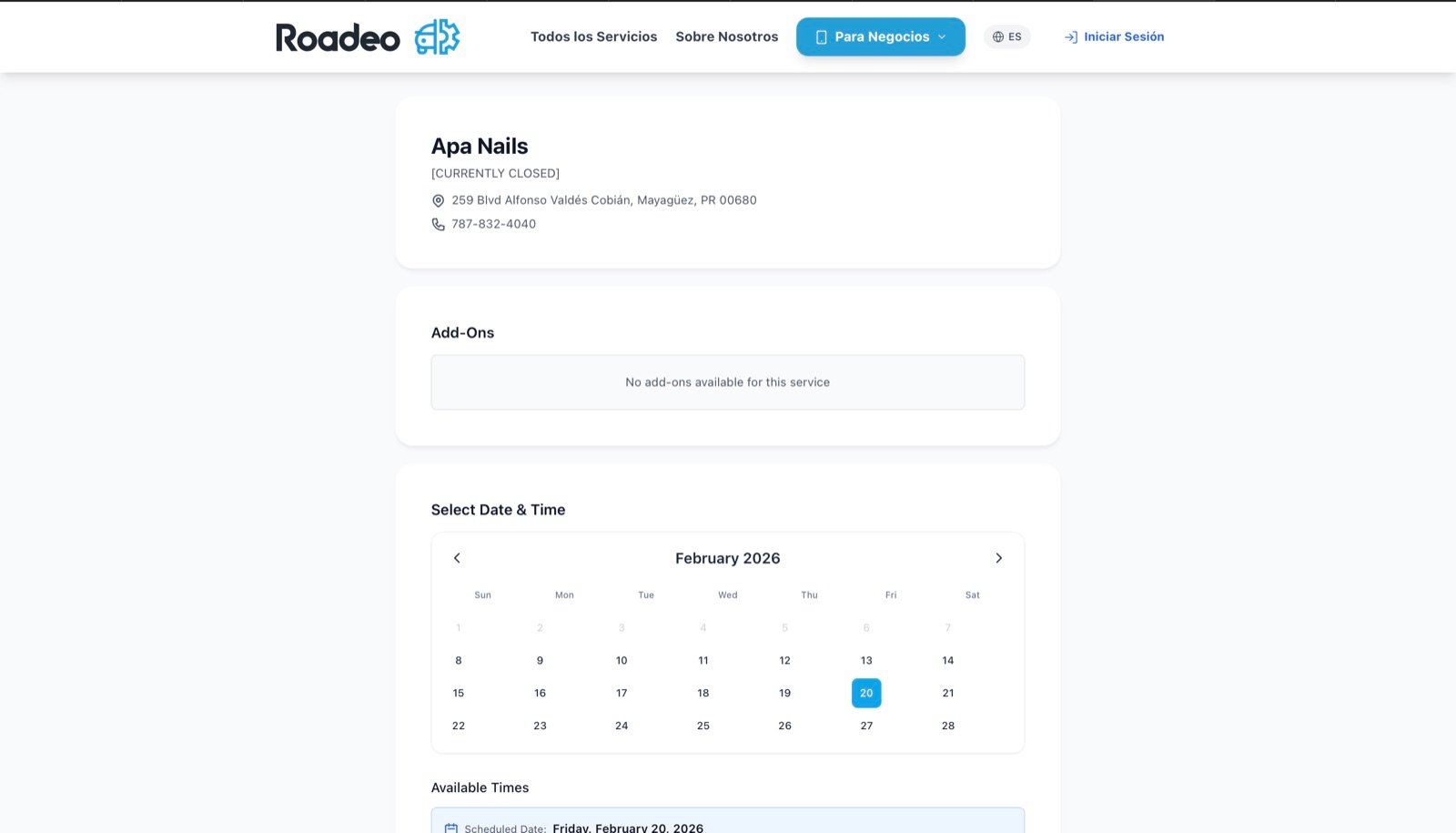
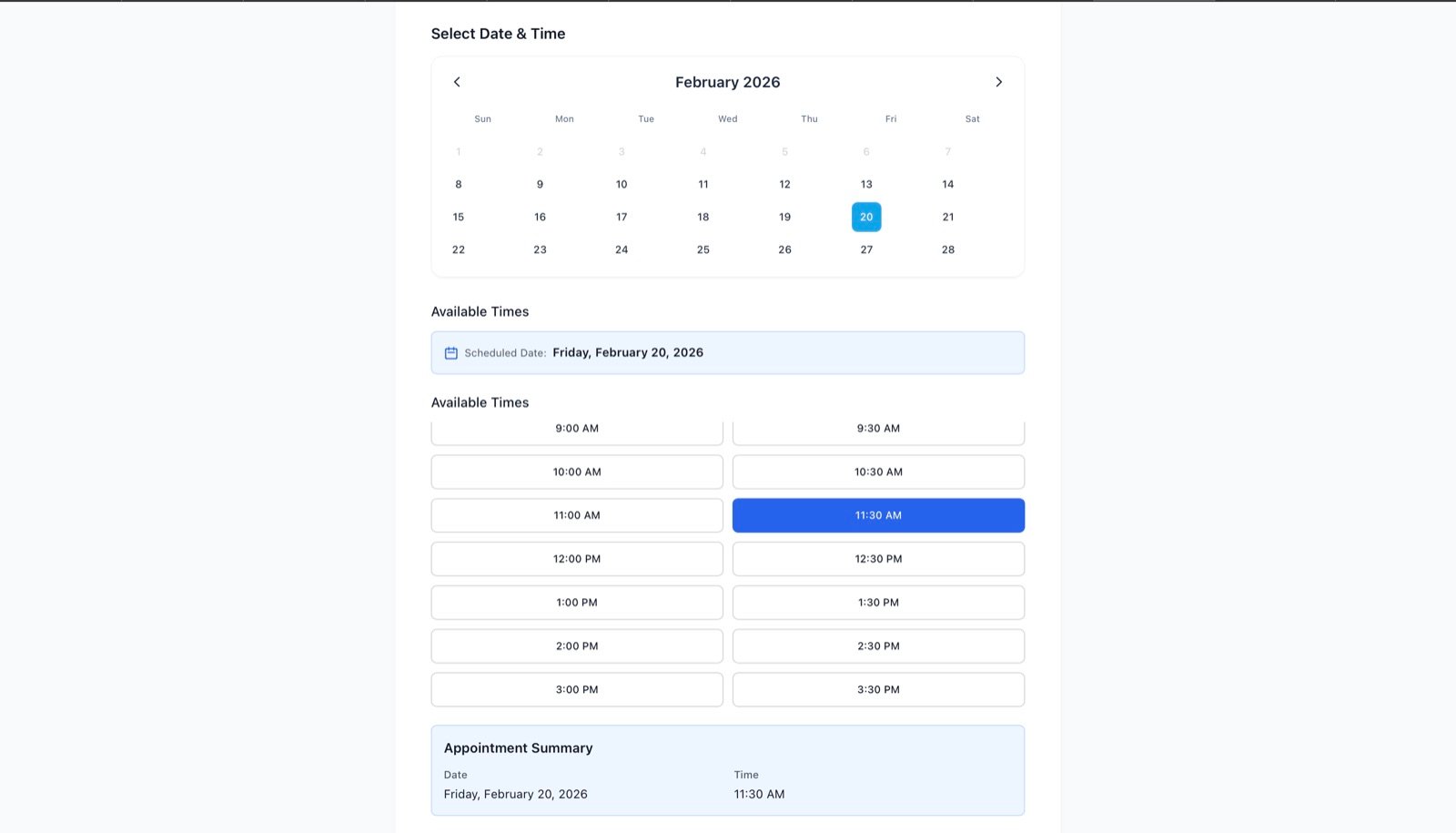
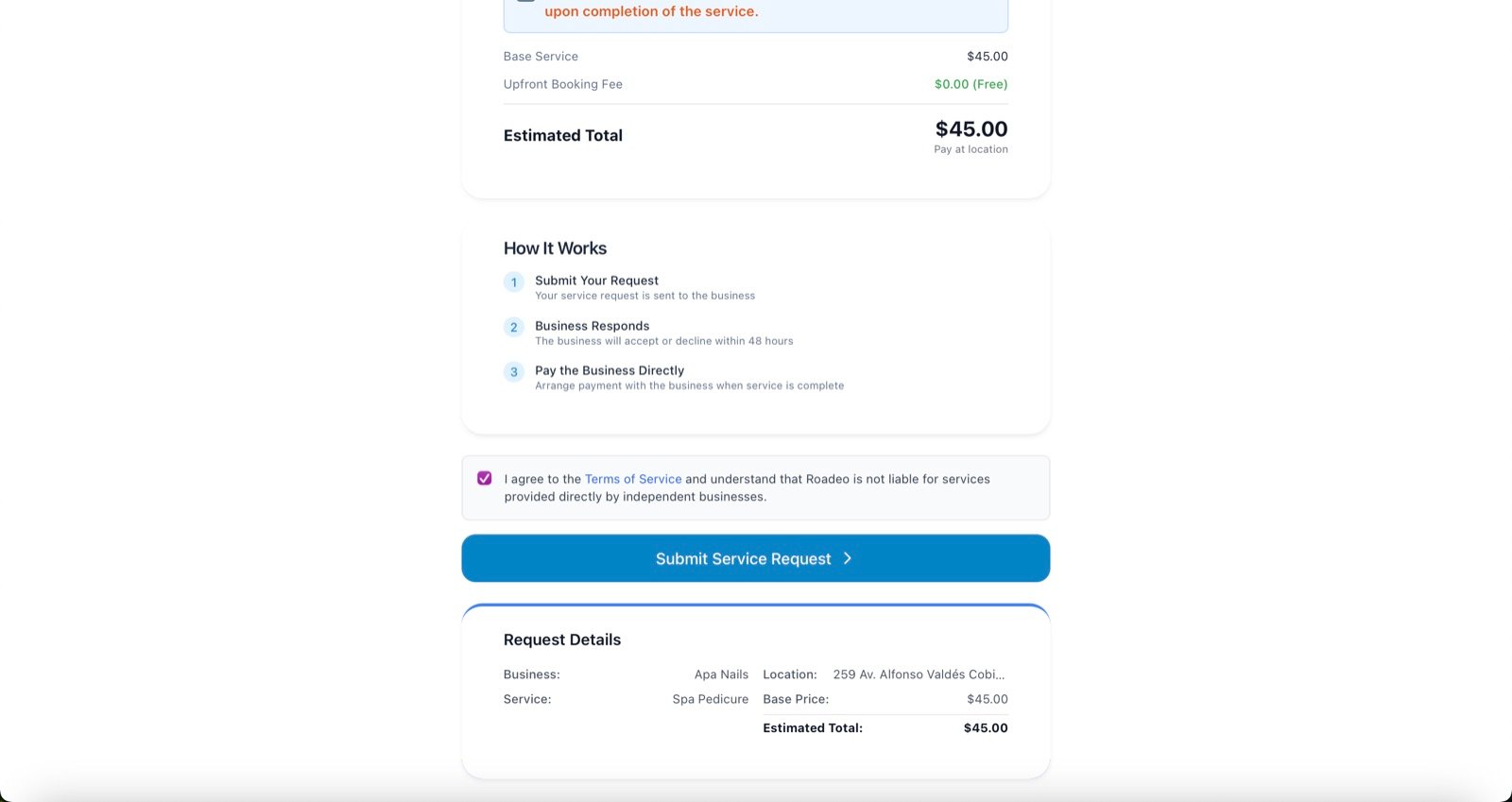
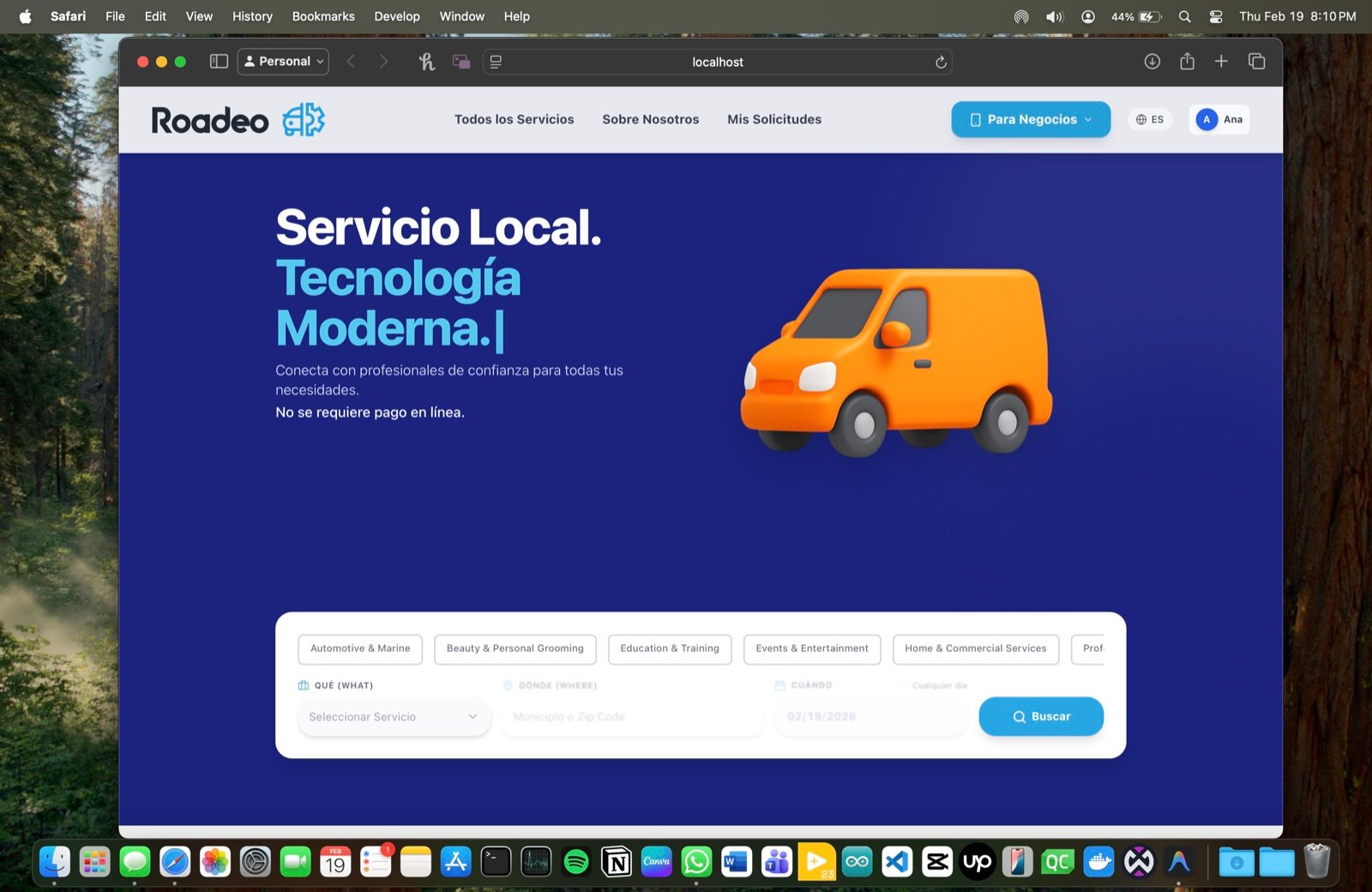
Mobile-first pass (November 2025 – March 2026)



3.2 Bilingual, accent-tolerant search
Search is the main way into the marketplace, so I rebuilt it in layers:
- Normalization: queries and data are Unicode-normalized (NFD) with accents stripped, so
mecanicomatchesmecánicoandlavadomatchesLavado. - Category detection: a query like "car wash" or "lavado de carro" resolves to a service category, so customers land on a filtered list instead of a raw keyword match.
- Ranked business matching: fuzzy search (Fuse.js) when the index is loaded, with a lightweight scoring fallback on cold start (exact name > prefix > all words > partial word > tags > description).
- Abbreviations and exact matches, plus an autocomplete dropdown that lets customers jump straight to a business from the home page or the navigation bar.
I tested search against a broad list of English and Spanish queries to make sure common phrasing resolved correctly.
3.3 Travel-time–aware scheduling
Providers drive to each customer, so back-to-back slots across town aren't realistic. I added a travel-time buffer to the booking flow:
- A Cloud Function looks at the provider's existing appointments that day and the customer's location, and returns how many minutes of buffer the request needs.
- If the requested time has to move, the customer sees a clear modal showing the original and adjusted times before submitting.
- The calculation runs on the server with admin privileges, so the client never receives other customers' appointment data. This was a deliberate privacy decision.
I also built the detailed slot states (accepted, full, already booked by you) so the time picker explains why a slot isn't available instead of just hiding it.
3.4 Post-service reviews via one-time SMS links
To build trust in the marketplace, I designed and shipped a review system end to end:
- When an appointment is marked complete, a Firestore trigger creates a single-use review token and texts the customer a link.
- The customer opens a bilingual review page (no login needed). It collects a 1–5 rating, written feedback, whether the provider arrived on time, and optional improvement notes.
- A callable Cloud Function validates the input and redeems the token inside a Firestore transaction, so the same link can't be used twice even if it's submitted from two tabs at once.
This touched the whole stack: Cloud Function triggers, SMS delivery, schema updates, data converters, a new route and page, and translations in both languages.
3.5 Customer feedback and contact channels
- Feedback modal: a short in-app prompt shown in two situations, after a booking and when a customer returns to the home page. Responses are saved with context about the service booked so the team can act on them.
- Contact form: replaced a generic page with a structured form (contact info + issue-type dropdown) that routes inquiries into a dedicated collection for follow-up.
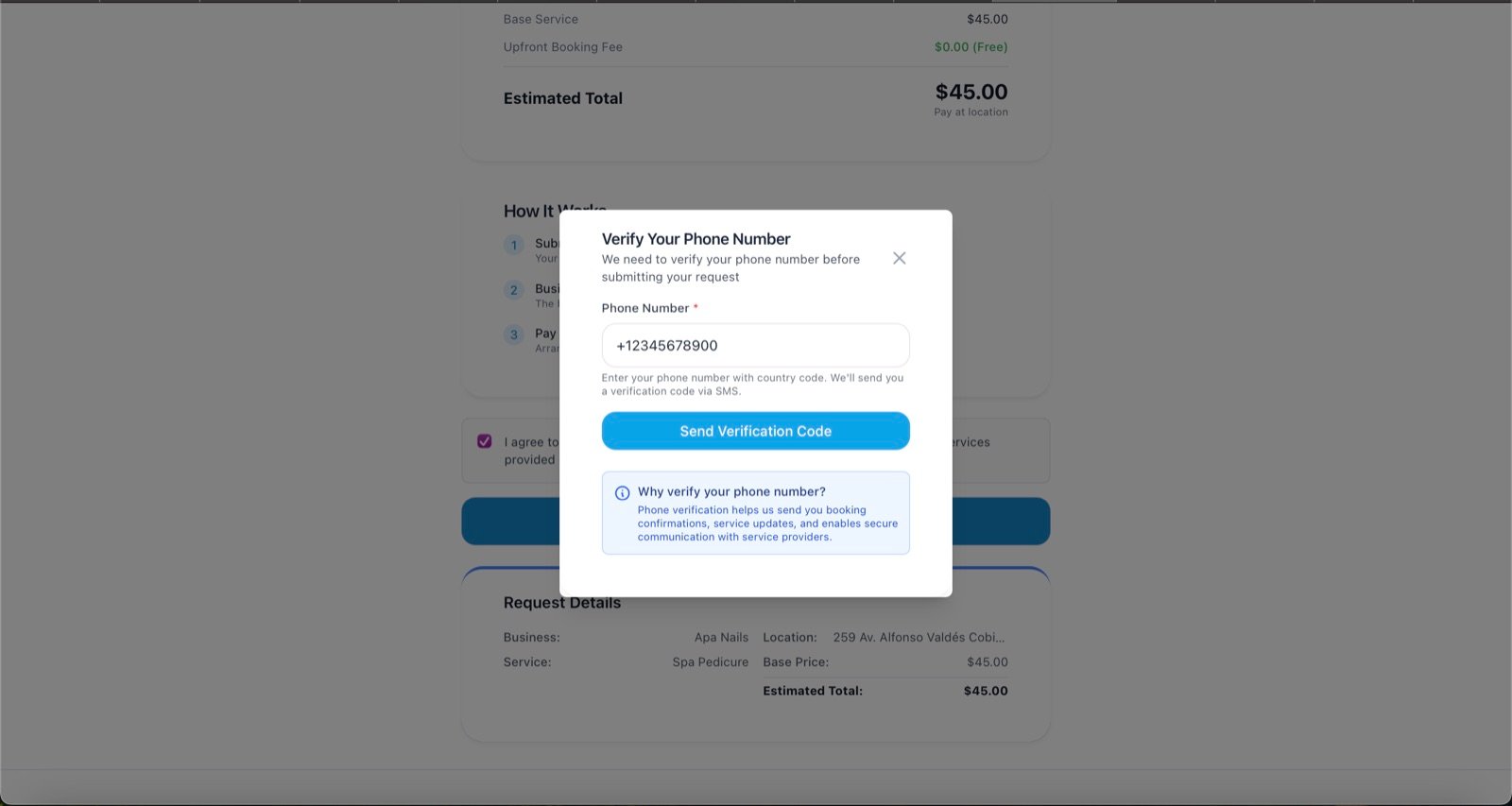
3.6 SMS consent and trust signals
- Added explicit SMS consent to phone verification: customers must check a consent box before they can continue, in line with messaging-compliance requirements.
- Added an "Instant Booking" badge for providers on the paid tier and visually de-emphasized booking with providers who can't receive requests in real time. This cut down on requests that could never be fulfilled.
3.7 Map view for business discovery
Most recently I built an interactive map view of businesses using the Google Maps JavaScript API:
- Custom pill-shaped markers built on
google.maps.OverlayViewinstead of default pins, with active and hover states synced to the business list next to the map. - A selected-business card for navigating straight into that business's booking flow.
- Server-side coordinate normalization, because location data reached the backend in several shapes (
latLng,latlng, GeoPoint-serialized_latitude/_longitude, and plain{lat, lng}). One normalizer keeps the frontend simple.
3.8 Provider-facing product pages
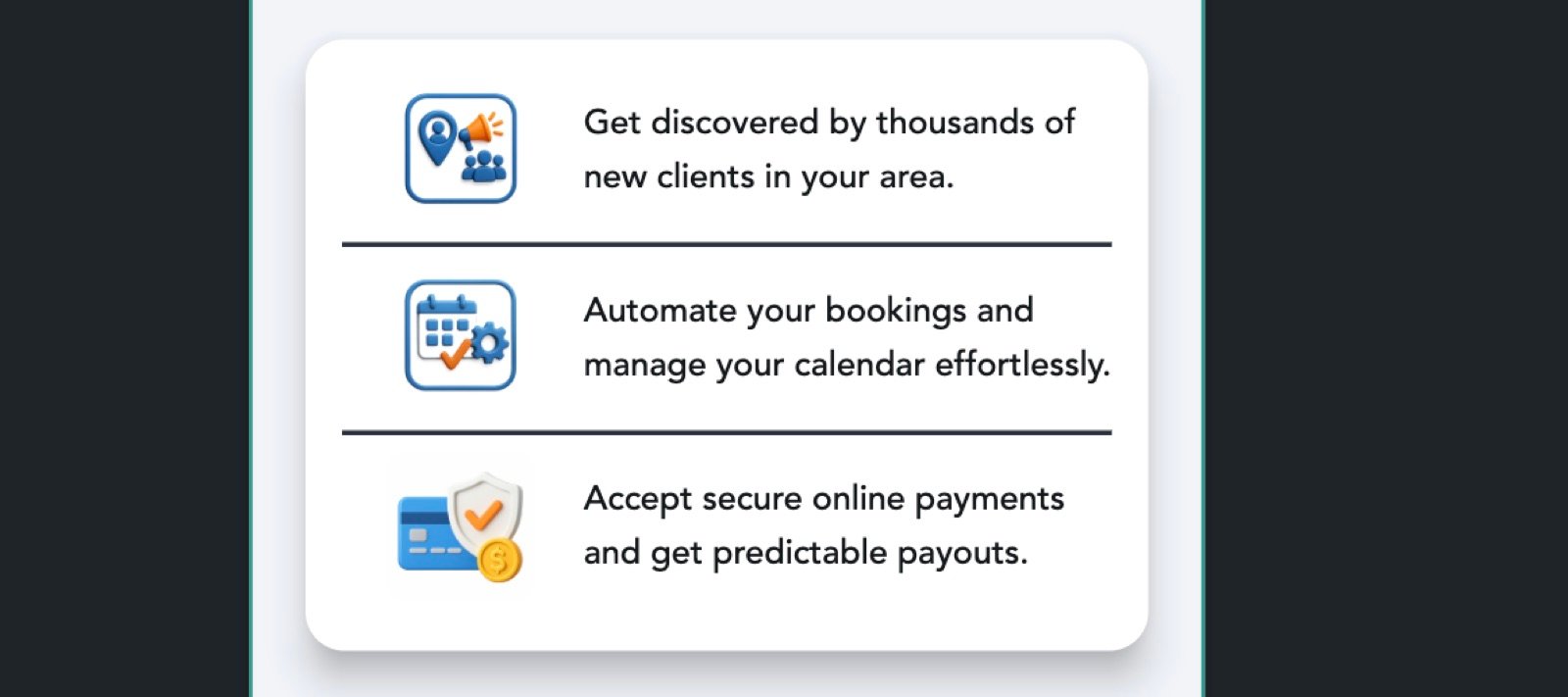
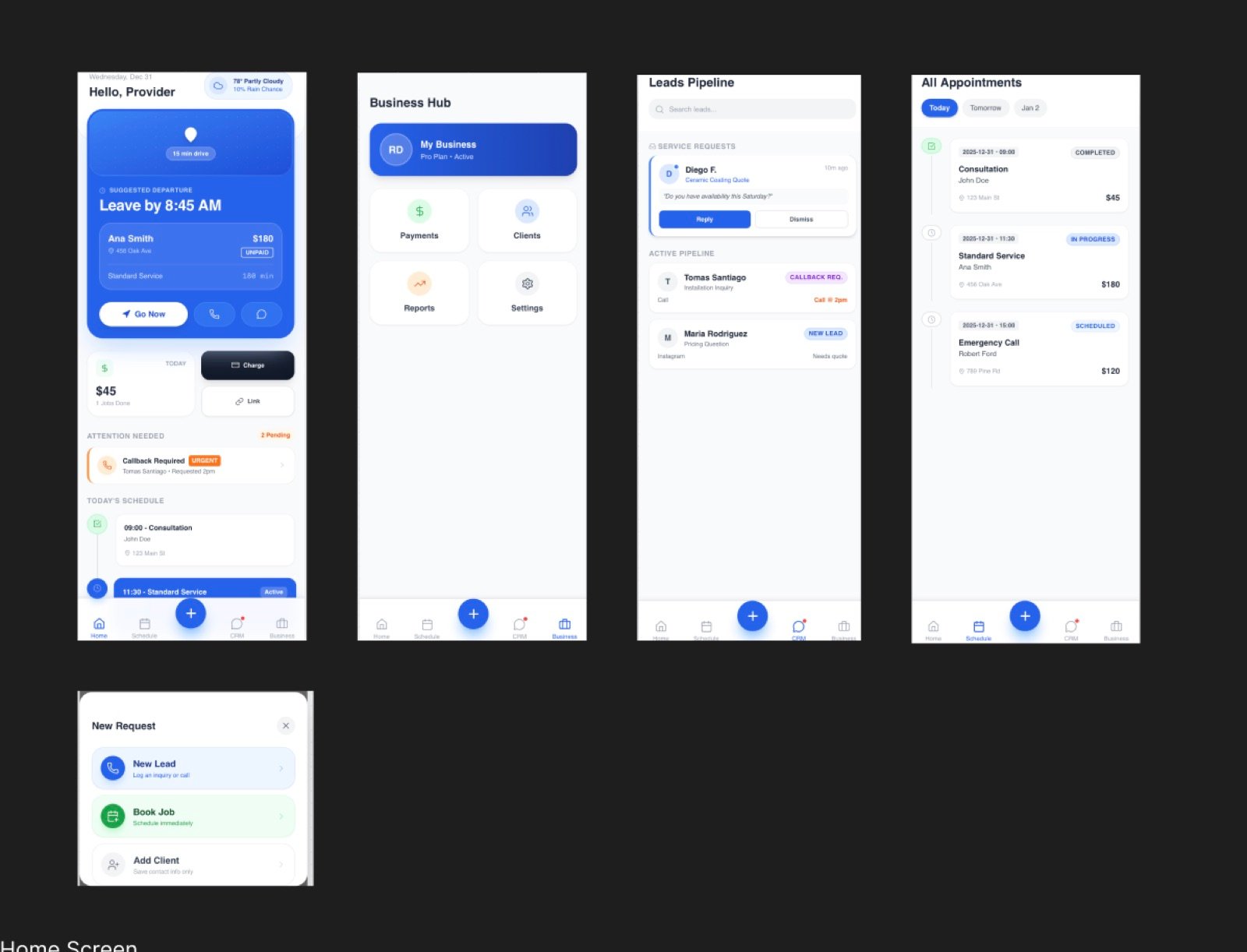
To support provider acquisition, I built product pages for the provider app, including a features/pricing page, a download modal and an interactive fee calculator that lets a business estimate platform fees before signing up.
4. Technical Challenges & How I Solved Them
- Keeping two data shapes in sync. The frontend uses camelCase TypeScript models, while Firestore follows a snake_case schema shared with the mobile app. Every new feature (reviews, feedback, customer notes, default service location) needed changes on both sides. I routed all reads and writes through a central converter layer instead of writing to Firestore directly, which kept web and mobile consistent.
- Privacy vs. availability. Showing accurate availability means reasoning about other customers' bookings, which security rules rightly block on the client. I moved those calculations (slot availability, travel buffer) behind Cloud Functions that return only what the UI needs, such as occupied windows or buffer minutes, and never raw appointment records.
- Bilingual everything. Every user-facing string goes through a shared translation context with English and Spanish keys. Along the way I fixed several places that showed only English or mixed the two languages, including the main home-page heading.
- Shipping safely. When a half-finished questionnaire step slipped into the live booking page, I pulled it out of production quickly without losing the work, keeping it on a feature branch until it was ready.
5. Engineering Practices
- Feature-branch workflow with pull requests into the main development branch, and continuous deployment to Firebase Hosting through GitHub Actions.
- Testing: Vitest + Testing Library for units and components, and Playwright end-to-end tests for the booking flow.
- Semantic versioning with a version-bump script that keeps the app version in sync across files.
- Code splitting: lazy-loaded routes and vendor chunks (maps, Firebase, etc.) to keep the first load light on mobile.
- Security: Content-Security-Policy updates when adding third-party APIs, and server-side validation on every callable function.
6. Outcomes
- Took the customer web app from a low-code prototype to a production TypeScript application with a full bilingual (EN/ES) experience.
- Made search work the way customers actually type: accents, abbreviations, Spanish and English.
- Booking requests now reflect real-world travel constraints, so customers see realistic times.
- Built a complete trust loop (SMS review links, feedback prompts, a structured contact form) that gives the business ongoing customer insight.
- Added map-based discovery so customers can browse providers by location.
7. What I Learned
- Design for the data you actually have. Production data rarely matches the schema doc. Defensive normalization at the boundary (like the coordinate handling) saved many downstream bugs.
- Privacy is an architecture decision. Deciding early which logic runs on the server shaped the design of several features for the better.
- Small UX signals matter in a marketplace. Badges, disabled states and "why is this slot unavailable" messages guided customers toward bookings that could actually be completed.
- Bilingual is a feature, not a translation pass. Supporting two languages well affects search, layout (Spanish strings run longer) and copy decisions from the start.